
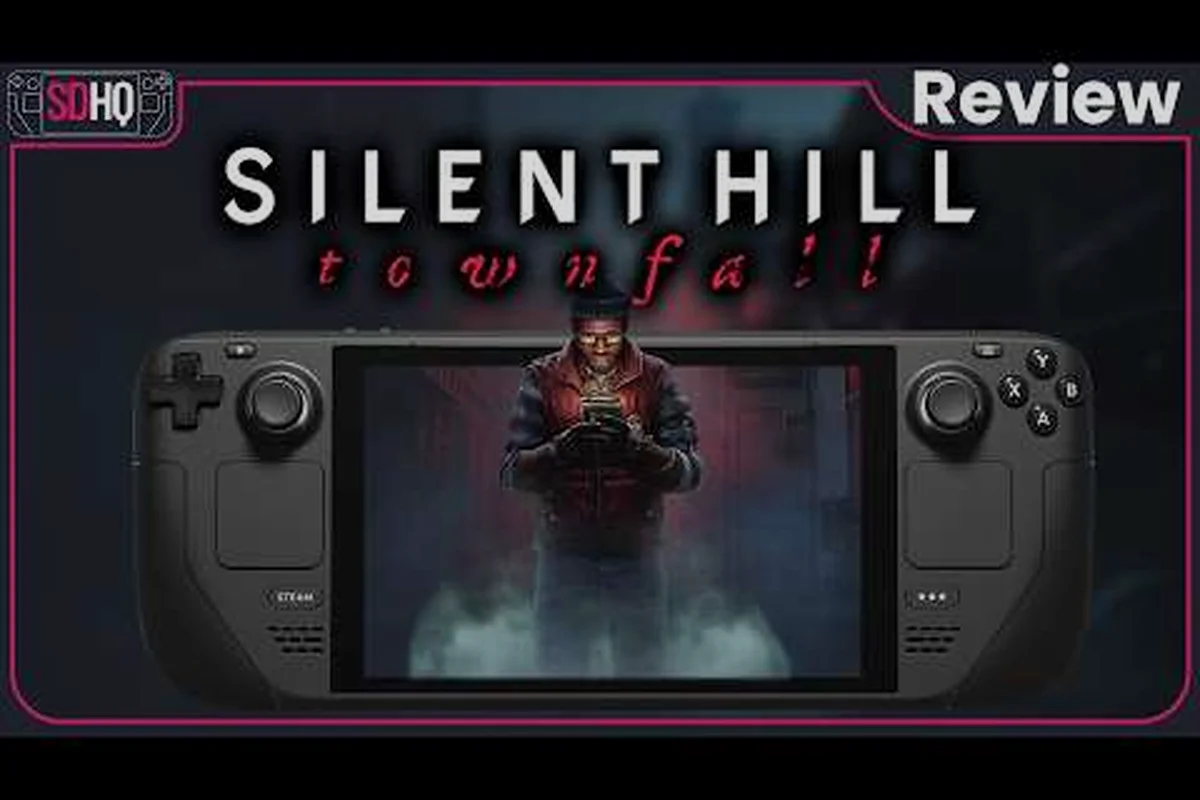
St. Amelia is rendered in crisp CRTV static, but the Silent Hill Townfall port quality on PC reveals a few rough edges that deserve attention. The first-person horror experience from Screen Burn Interactive and KONAMI ships with Unreal Engine 5 ambitions that demand real hardware. Discover the most efficient configuration for the title's first 1996 island hours.
Reading the Steam Spec Sheet Before You Touch a Slider
The official SILENT HILL: Townfall on Steam page defines two clear hardware tiers, and understanding them is essential before anyone touches the graphics menu. The minimum target is built around a Ryzen 5 3600 or i7-8700K, paired with 16GB RAM and either an RTX 2060 Super or RX 6600, aiming for 1080p at 30fps on Low. The recommended spec jumps to a Ryzen 7 5700X or i7-9700K, 32GB RAM, and an RTX 3080 or RX 7800 XT for 4K at 30fps on High with DLSS/FSR/TSR Balanced.
A 75GB install footprint, a 1996-set psychological horror atmosphere, and a heavy reliance on volumetric fog mean that the recommended GPU list barely covers the headroom needed for the most expensive ray-traced reflections. Players chasing 60fps will need a card a tier or two above the official recommendation, and the gap between 1080p and 4K scaling is wider than usual because of the dynamic resolution ceiling.
What the Spec Sheet Hides
The official store page lists ray tracing and FSR/DLSS/TSR support as standard, yet the day-one build leans heavily on temporal upscaling. Anyone expecting native 4K on a 3080 will be disappointed, because internal resolution scale tops out lower than most UE5 peers. This is a deliberate choice to keep CRTV scanline effects stable, and it explains the unusually low 30fps target for the recommended tier.
| Hardware Tier | CPU | GPU | RAM | Target Output |
|---|---|---|---|---|
| Minimum | Ryzen 5 3600 / i7-8700K | RTX 2060 Super / RX 6600 | 16GB | 1080p, 30fps, Low |
| Recommended | Ryzen 7 5700X / i7-9700K | RTX 3080 / RX 7800 XT | 32GB | 4K, 30fps, High, Upscaler Balanced |
| Community Stretch | Ryzen 7 7800X3D / i7-13700K | RTX 4080 / RX 7900 XT | 32GB | 1440p/4K, 60fps, Upscaler Quality |
Ultrawide, 32:9, and the Resolution Scale Ceiling
One of the most discussed elements of Silent Hill Townfall ultrawide support is whether the game actually renders at native 5120x1440. The Unreal Engine 5 backend ships with proper 21:9 and 32:9 aspect ratio handling, but the field of view stays locked to roughly 95 degrees regardless of the chosen aspect. That produces noticeable pillarboxing in cutscenes where 2.35:1 letterboxing stacks on top of a 21:9 frame.
Players running 3440x1440 panels report a clean 16:9-equivalent image with extended peripheral detail, which makes the abandoned streets of St. Amelia feel denser. 5120x1440 panels show a slightly softer image because the internal render target stretches further, and the resolution scale slider sometimes refuses to push beyond 75% on cards that should comfortably handle more.
Resolution Scale Behaviour Across GPUs
| Resolution Scale | 1080p (RTX 3080) | 1440p (RTX 3080) | 4K (RTX 3080) | 3440x1440 (RTX 3080) |
|---|---|---|---|---|
| 100% | 35-42 fps | 28-34 fps | 18-24 fps | 26-32 fps |
| 75% + DLSS Quality | 58-64 fps | 45-52 fps | 32-38 fps | 42-48 fps |
| 50% + DLSS Performance | 80+ fps | 65-72 fps | 48-55 fps | 60-68 fps |
These numbers come from community testing reported by players, and they are heavily dependent on which chapter of the 30-40 hour experience is being measured. The first few hours on the ferry and the lighthouse are lighter, while the late-game forest and hospital sequences hammer the GPU harder. Pairing this layout with the graphics upscaler guide gives a fuller picture of how DLSS, FSR, and TSR each handle the wider frame.
Ray Tracing Cost, Shader Quality, and the Real Frame Budget
Silent Hill Townfall ray tracing is positioned as a flagship feature, yet it is not enabled by default and the toggle is buried in the advanced graphics menu. With ray-traced reflections on High, even an RTX 4070 Ti drops roughly 22-28% in frame rate at 1440p, because every puddle and metal surface on the abandoned pier now reflects dynamic light. Shader quality is the more impactful slider, because it controls the density of CRTV scanline overlays, the soft volumetric fog, and the dynamic shadow cache.
Texture quality matters less than expected, mostly because most of the surface work is covered in CRT grain that hides aliasing. Pop-in is most visible at the Medium texture preset, where rocks and street debris load visibly when the player rounds corners. High or Ultra reduces the pop-in window to a barely noticeable flicker.
Shader and Texture Impact Table
| Setting Pair | Average 1440p Frame Drop (RTX 4070) | Visual Difference |
|---|---|---|
| Texture Medium → High | ~2% | Cleaner rock surfaces, less pop-in |
| Texture High → Ultra | ~3% | Sharper brick detail, marginal benefit |
| Shader Medium → High | ~8% | Denser fog, smoother scanline overlays |
| Shader High → Ultra | ~6% | Crisper shadow cache, longer VRAM load |
| Ray Tracing Off → High | ~25% | True puddle reflections, dynamic light bounces |
The texture quality slider in particular is a good place to spend VRAM budget, because the higher presets also pre-cache a few more ambient occlusion probes. Most players will not see the difference between High and Ultra unless they freeze-frame a wall, so this is the first setting to bump up after securing a stable frame rate.
Crashes, Shader Hiccups, and Stability
Silent Hill Townfall crashes are a real concern for the early-access Deluxe crowd who got 48 hours of head start. The most commonly reported issue is a softlock when saving inside the CRTV menu, which forces a hard reboot and risks corrupting the autosave slot. The second most common crash is a DirectX 12 driver timeout on RTX 30-series cards when ray tracing is enabled and the player enters the lighthouse basement.
Shader quality hiccups show up as a single frame of black geometry when the game streams in a new area, particularly the transition from the town to the forest. This is a streaming issue tied to the 75GB install, and it disappears once the shaders are pre-compiled through the included benchmark. The current community workaround is to launch the benchmark tool first, accept the long shader compile, and then load the actual save.
Common Crash Triggers and Fixes
| Symptom | Likely Cause | Community Fix |
|---|---|---|
| Crash on save inside CRTV menu | Save file lock conflict | Save only at designated rooms |
| DX12 timeout in lighthouse | Ray tracing + driver interaction | Disable ray tracing, cap to 60fps |
| Black geometry flash on load | Shader cache miss | Pre-compile shaders via benchmark |
| Stutter in forest chapter | VRAM overflow at 4K Ultra | Drop texture to High, shader to High |
| Audio desync after pause | Steam Overlay conflict | Disable Steam Overlay in-game |
Steam Cloud syncing can also corrupt a save if the player forces a quit during a checkpoint write, so disabling the in-game overlay until the day-one patch is verified is a smart precaution. Anyone reading the PC Gamer review will see the same shader hiccup complaints echoed in early Metacritic feedback.
Tuning the Presets for a Stable 60fps
Most players chasing a locked 60fps at 1440p will need to combine resolution scale, upscaling, and a few preset adjustments. The cleanest balance for an RTX 4070 class card is to lock resolution scale at 75%, force DLSS Quality, set texture quality to High, shader quality to High, and leave ray tracing disabled. This setup lands within a 58-65fps window during the lighter ferry chapter and dips to roughly 52-58fps in the heavier forest chapter.
A 1080p player with an RTX 3060 or RX 6700 XT should run the Low preset as a baseline, push texture quality to Medium for cleaner surfaces, and let FSR 2 Balanced carry most of the upscale weight. 4K players on an RTX 4080 will be happiest with resolution scale at 50%, DLSS Performance, and shader quality on High, because Ultra settings push VRAM use past the 12GB mark during the hospital chapter.
60fps Preset by GPU Class
| GPU Class | Resolution | Resolution Scale | Upscaler | Preset Target |
|---|---|---|---|---|
| RTX 3060 / RX 6700 XT | 1080p | 100% | FSR 2 Balanced | Low + Texture Medium |
| RTX 4070 / RX 7800 XT | 1440p | 75% | DLSS Quality | High |
| RTX 4070 Ti / RX 7900 XT | 1440p | 100% | DLSS Quality | High |
| RTX 4080 / RX 7900 XTX | 4K | 50% | DLSS Performance | High |
| RTX 4090 | 4K | 75% | DLSS Quality | Ultra, RT Low |
Players who want to push the Silent Hill Townfall ultrawide experience at 3440x1440 should treat the 1440p column as the baseline and expect a 5-8% frame cost from the wider render target. Anyone learning the stealth mechanics alongside these settings will find the stealth survival tips helpful, because the heavier fog density at lower shader settings can change how visible the monsters are.
Frequently Asked Questions
Does Silent Hill Townfall support native ultrawide on PC?
Yes, the Unreal Engine 5 build renders correctly at 21:9 and 32:9 without cropping, but the field of view stays fixed at the 16:9-equivalent value. Players on 3440x1440 panels get the cleanest result, while 5120x1440 displays see a softer image because the internal resolution scale slider tops out lower than expected.
Is the ray tracing option worth enabling on a mid-range card?
Not really, because Silent Hill Townfall ray tracing costs roughly 25% of the frame budget on an RTX 4070 and the visual gain is mostly limited to puddle reflections on the pier. Players chasing 60fps should leave it disabled and spend the budget on shader quality instead.
Why does the game crash when saving in the CRTV menu?
The CRTV save slot shares a lock with the autosave system, and the day-one patch has not yet resolved the conflict. The community workaround is to save only at the designated room checkpoints, which avoids the softlock entirely and protects the save file from corruption.
How can shader quality hiccups be reduced on launch day?
Run the included benchmark tool once to pre-compile the shader cache, then launch the actual game. The single-frame black geometry that appears during area transitions will mostly vanish, because the cache is already warm by the time the player reaches the forest chapter.
What texture quality preset is best for VRAM-limited cards?
Medium is the safest tier, but High is worth the 2% cost on any card with 8GB or more. The Ultra preset adds almost no visual benefit over High, and the pop-in reduction from High is more valuable than the marginal sharpness bump that Ultra offers.