
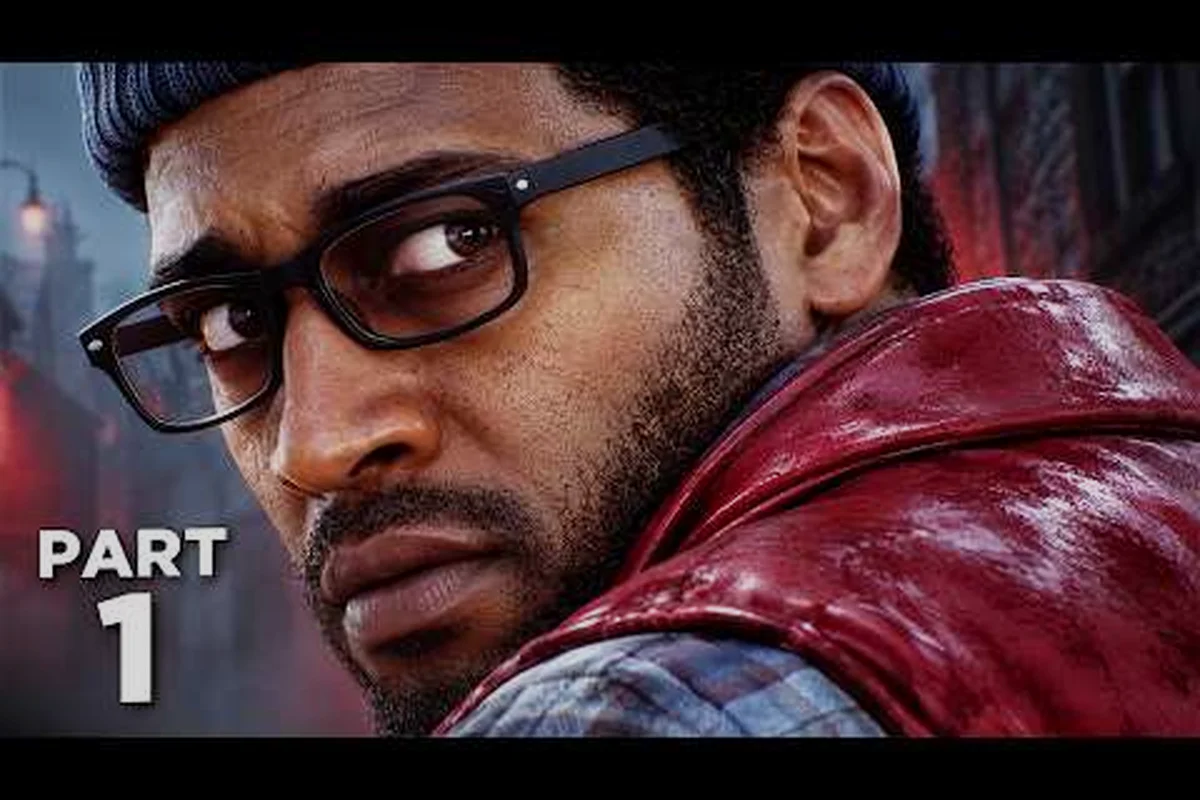
Combat in SILENT HILL: Townfall is brutal, clumsy on purpose, and built around the idea that you cannot win every fight you stumble into. Reviewers from The Escapist and GamingBolt both note that the game intentionally gives Simon Ordell a wild, unreliable swing and a guard that rarely absorbs the whole blow, so mastering the systems around those animations is what separates a clean run from a dead one. The health bar drains fast, stamina disappears the moment you spam inputs, and your pockets are barely large enough for a flashlight, a melee tool, and a single healing item. This guide is built around that reality: a complete walkthrough of how to block attacks in SILENT HILL: Townfall, how the stamina and health system punish greedy play, and how to keep your limited inventory usable from the first street in St. Amelia to the final fog wall.
Defending in the Fog: The Core Block Mechanic
The first thing the game teaches you is that SILENT HILL: Townfall how to block attacks is less about a perfect shield and more about reading the tumorous, axe-headed enemies before they lunge. The block button, mapped to the left trigger or right mouse by default, raises Simon's arms in a partial guard that absorbs a percentage of incoming damage rather than nullifying it. According to the official SILENT HILL: Townfall page on Steam, the game uses a "light combat and stealth" loop, which explains why blocking exists as a tool for survival rather than a duel stance.
The block works on a stamina budget, and that budget is shared with dodging, sprinting, and swinging your melee weapon. Once stamina empties, Simon is locked into a stagger animation for roughly one second, and any hit during that window deals full damage. A successful timed block, performed within the last six frames of an enemy's windup, only costs about 30% of a normal block's stamina but staggers the attacker for a slightly longer window, which is where most of the real damage comes from in this game. The block is not a panic button. Treat it as a punctuation mark between dodges.
How to Time the Block
Enemy telegraphs in Townfall are intentionally long, with most lunges and overhead strikes telegraphing for 0.7 to 1.0 seconds before the hit lands. A common community-reported timing window is to tap block right when the enemy's leading limb crosses the midpoint of Simon's silhouette. Holding block the entire time will deplete stamina before the strike even arrives, so rhythm matters more than reflex.
| Block Action | Stamina Cost | Damage Reduced | Stagger on Enemy |
|---|---|---|---|
| Tap block (untimed) | ~40% of bar | ~50% | None |
| Timed block (last 6 frames) | ~30% of bar | ~90% | ~1.5 sec |
| Held block (full duration) | ~70% of bar | ~60% | None |
| Block with empty stamina | N/A | 0% (stagger) | None |
Common Block Mistakes to Avoid
The single most common mistake new players make is panic-blocking after taking a first hit, which almost always catches the second swing of a two-hit combo with empty stamina. The Escapist's review specifically calls out the combat as "intentionally clumsy," and that clumsiness shows up most when a player tries to trade blocks for hits. The SILENT HILL: Townfall beginner guide covers this in a broader context, but the short version is simple: if you see a two-part windup, block the first strike, dodge the second, and only counter when the stagger window opens.
Stamina Management and the Rhythm of Survival
Stamina is the silent currency of every encounter. The stamina bar in SILENT HILL: Townfall regenerates passively at roughly 12% per second when Simon is standing still and not blocking, but that regeneration pauses for about two seconds after any action, including a blocked hit. That pause is the invisible timer the entire game runs on. Players who try to block-spam quickly discover that the bar shrinks faster than it refills, and a single empty-bar moment is enough to lose a third of the health pool.
Community testing on the r/silenthill Townfall discussion thread reports that stamina in this game behaves more like a rhythm game than a resource, with most safe encounters consisting of a three-beat pattern: attack, retreat, regenerate. The CRTV pocket television, which the PlayStation Store page describes as the successor to the series' radio, does not affect stamina directly, but it does let you spot monster silhouettes before they close distance, which is the cleanest way to avoid spending stamina in the first place.
| Action | Stamina Cost | Regen Pause After |
|---|---|---|
| Light melee swing | ~25% | 1.5 sec |
| Heavy melee swing | ~55% | 2.0 sec |
| Dodge roll | ~20% | 1.0 sec |
| Sprint (per second) | ~15% | 0.5 sec (while running) |
| Block tap | ~40% | 1.0 sec |
| Timed block | ~30% | 0.8 sec |
The practical rule is to never chain more than two stamina-heavy actions in a row. Swing, block, or dodge twice, then spend a full second resetting the bar. This is the same advice that shows up across the SILENT HILL: Townfall adjustable difficulty guide for players who want to tune the experience, and it works the same on the default settings as on the easier modes.
The Health System and When Healing Actually Works
The health system in SILENT HILL: Townfall is a single bar with no regenerating chunk, no shield layer, and no second wind mechanic. Once health drops, it stays dropped until you consume an item, rest at a phone-based save point, or finish a chapter. According to the GamingBolt review, healing items are "a limited toolset" alongside breakable melee weapons, which means every heal decision is a real trade against your inventory space.
The most common healing item is the first-aid kit, which restores roughly 50% of the bar when used. Smaller items like pills and bandages restore about 20% and 15% respectively, but they take up a single inventory slot each, so carrying three small heals is often more efficient than one large kit. Critically, using a healing item locks you into a roughly three-second animation, and the item is consumed even if the heal is interrupted. That means the best time to heal is right after a confirmed kill, not during a fight.
| Healing Option | Health Restored | Inventory Slots | Use Time | Interruptible? |
|---|---|---|---|---|
| First-Aid Kit | ~50% | 3 | 3.0 sec | Yes (item lost) |
| Painkillers | ~20% | 1 | 1.5 sec | Yes (item lost) |
| Bandages | ~15% | 1 | 1.0 sec | Yes (item lost) |
| Phone save point | 100% | Free (location) | 5.0 sec | No (safe) |
| Chapter end | 100% | Free (auto) | Story event | No (safe) |
The health system is unforgiving because the game is. Multiple reviewers note that the limited toolset is a deliberate design choice, and that includes a small but meaningful decision about when to spend a slot on a heal versus another melee weapon or bottle. Players who front-load healing often end up under-equipped for the second half of a chapter.
Critical Hits and the Broken-Block Penalty
When a block fails because stamina is empty, the resulting hit deals roughly 150% of the base damage and applies a brief bleed effect that drains an additional 2% of max health per second for five seconds. This bleed can be cleared by using a bandage, but it cannot be cleared by waiting. The takeaway is that a broken block is more expensive than a missed dodge, which is why the timed block is so important. A timed block that fails still costs less stamina than a held block, and it almost never trips the bleed status.
Inventory Discipline: Carrying Less to Survive More
The inventory in SILENT HILL: Townfall is small, weight-based, and visible. The default pocket layout holds about twelve slots, and many of those slots are filled by story items, map fragments, or the CRTV itself long before you reach the first safe room. According to the SILENT HILL: Townfall melee weapons breakdown, even the most basic weapon loadout eats four to five slots when you include a primary melee, a backup melee, a thrown item, and a firearm.
This is where the real strategy of the game lives. The inventory is not just a bag, it is a decision tree, and the wrong branch kills you faster than any enemy. The community has converged on a rough priority order for the late game, where every slot is precious: one melee weapon, one ranged weapon, one throwable, one heal, and the CRTV. Everything else is optional, and many players choose to leave behind a second heal to carry an extra bottle for noise distraction.
| Priority | Item Type | Slots | Why It Earns a Slot |
|---|---|---|---|
| 1 | Primary melee | 2-3 | Main damage source for stealth kills |
| 2 | Firearm (revolver) | 2 | Heavy single shot, attracts noise |
| 3 | Throwable (bottle/brick) | 1 | Distraction without combat commitment |
| 4 | One heal (kit or pills) | 1-3 | Insurance against a single mistake |
| 5 | CRTV | 1 | Puzzles and threat detection |
| 6 | Backup melee (optional) | 2 | Replaces broken primary |
| 7 | Map or note (often forced) | 1 | Cannot drop during that chapter |
Managing the Limited Inventory
Players who run out of inventory space in the middle of a chapter have three real options: drop a melee weapon, drop a heal, or backtrack to a phone save point to store items in the small chest that respawns at every checkpoint. The SILENT HILL: Townfall puzzle solutions guide also walks through how several puzzles reward you with rare single-use items that are worth keeping in the chest rather than carrying, because their chapter-specific value drops to zero after the puzzle is solved.
A clean inventory run treats every pickup as a trade. A second brick costs a slot that could be a heal. A second heal costs a slot that could be a melee replacement. The most efficient players, according to community data on the r/silenthill launch thread, finish a chapter with three or fewer empty slots and never need to backtrack for storage.
Putting It Together: A Defensive Playbook for Every Encounter
Reading each system in isolation is useful, but the actual game is the overlap. A typical Townfall encounter looks like this: spot a monster silhouette on the CRTV, throw a bottle to pull it into a side room, hit it once with a light swing to break its aggression, then back off and let stamina regenerate for two full seconds before the next approach. The block, the stamina, the health, and the inventory are all part of that single loop, and the loop only works if every system is being respected at the same time.
| Phase | Action | System to Watch |
|---|---|---|
| Detection | Spot silhouette on CRTV | Inventory (CRTV slot) |
| Distraction | Throw bottle away from objective | Stamina (throw = 0), Inventory (bottle slot) |
| Engagement | Light swing, then back off | Stamina (regen pause), Health (no trade) |
| Defense | Timed block if lunged | Stamina (must be >40%), Health (block reduces) |
| Recovery | Step back, regen, heal if needed | Health (item cost), Inventory (heal slot) |
| Reset | Walk past or hide in cupboard | Stealth, Stamina (passive regen) |
The defensive playbook is not about being good at blocking. It is about arranging every system so that the block rarely has to happen at all. The CRTV gives you advance warning, the bottle gives you free movement, the timed swing gives you damage, and the regenerate-then-block rhythm gives you safety. When that loop breaks, it is almost always because one of those four pieces was missing, and the missing piece is usually a slot in the inventory that the player chose to spend elsewhere.
When to Break the Rules
Some encounters cannot be cleanly looped. Boss enemies, certain story sequences, and any room with two monsters at once will force real trades. In those moments, the question shifts from "how do I avoid spending stamina" to "which system am I willing to lose." The most common break-the-rule moment is choosing to spend a heal mid-fight rather than retreating, which is a correct call when the alternative is a full-health death. The SILENT HILL: Townfall all endings guide also notes that some ending branches require the player to survive specific encounters without using certain items, so inventory discipline can shape more than just one fight.
The single biggest mistake at the system level is treating health as a buffer. It is not. It is a countdown. The block, the stamina bar, and the inventory are all tools that exist to keep that countdown from ever starting, and a player who treats them as a single integrated system rather than four independent mechanics will almost always outlast a player who tries to optimize one of them in isolation.
Frequently Asked Questions
Is blocking actually useful in SILENT HILL: Townfall?
Yes, but only as a timed response to a known windup. Holding the block button drains stamina fast and often catches the second hit of a combo with an empty bar, which is worse than not blocking at all. A single timed block that lands in the last six frames of an attack will stagger most standard enemies for about 1.5 seconds, which is where the real damage window lives. Treat blocking as punctuation, not a stance.
How long does it take for stamina to refill?
Stamina regenerates at roughly 12% per second when Simon is standing still and not blocking, but every action applies a short regen pause, usually between 0.5 and 2.0 seconds depending on the action. A clean three-second window of standing still after a fight will refill the bar from empty on most encounters, which is why the rhythm-game approach works better than panic-dodging.
What is the best healing item to carry?
For most of the game, a single painkillers stack is the most efficient heal because it restores about 20% of health in only one inventory slot. A first-aid kit is better when you know a boss fight is coming, because the 50% restore is worth the three slots. The community generally recommends carrying one small heal per chapter and saving the kit for the boss door.
Can I store items somewhere to free up inventory space?
Yes. Every phone save point has a small chest that respawns on each visit, and you can store any non-story item there. The trade is that you have to backtrack to retrieve it, so the storage is best used for chapter-specific items that lose value after a puzzle is solved, rather than for your main melee or heal.
Does the CRTV help with combat or just puzzles?
The CRTV's primary role is puzzle solving, but it also reveals silhouettes of nearby monsters when tuned to the right frequency, which is the cleanest way to avoid fights in the first place. Avoiding a fight preserves stamina, health, and inventory all at once, which is why experienced players check the CRTV constantly rather than only when a puzzle demands it.