
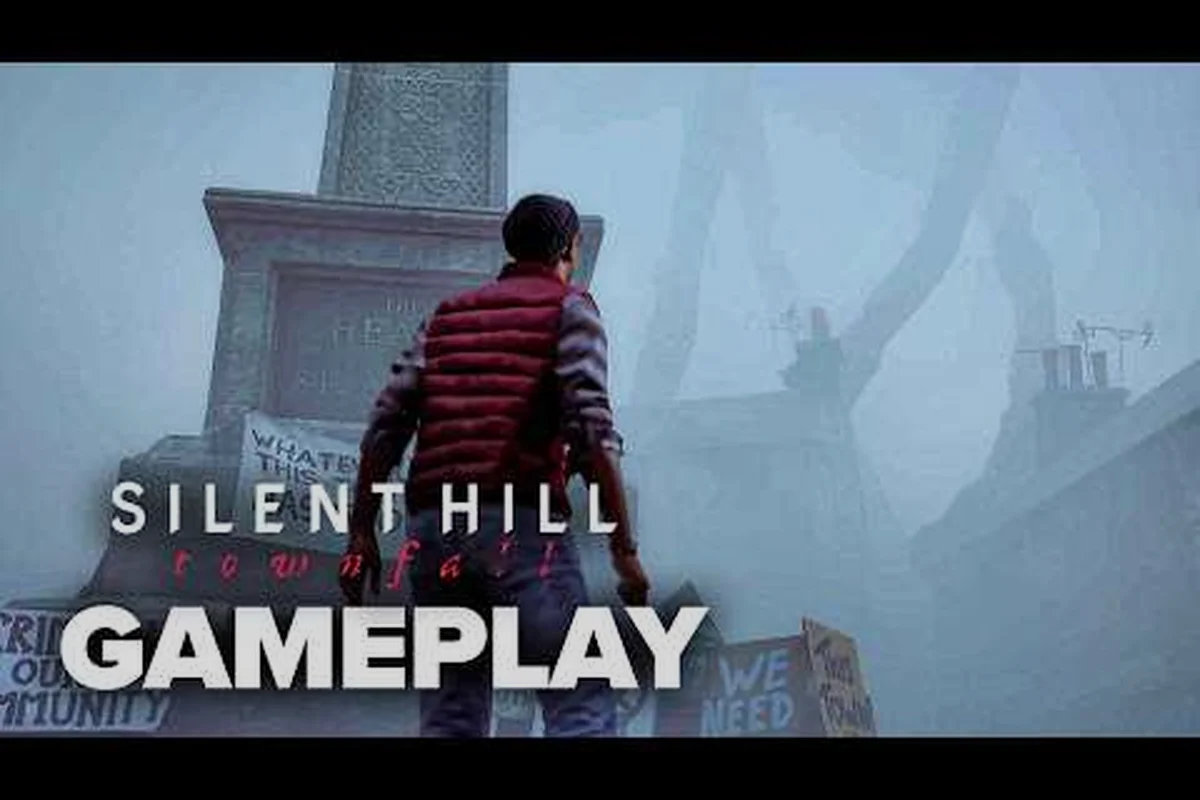
Stealth is the backbone of survival in SILENT HILL: Townfall, where clumsy melee swings and scarce ammo make every fight a risk. This Silent Hill Townfall stealth guide breaks down how to stay invisible, when to slip past a creature instead of swinging, and which tools give you the cleanest escape. The game pushes you toward selective confrontation, so learning its sneaking language pays off across every chapter of Simon Ordell's return to fog-choked St. Amelia.
According to the official Silent Hill: Townfall store page, the game emphasizes close-quarters evasion and environmental awareness rather than direct confrontation, which forms the foundation of every effective stealth approach.
Why Stealth Sits at the Core of Townfall's Design
Townfall wants you afraid of combat, not addicted to it. The Escapist's review describes melee as intentionally clumsy, with wild swings and unreliable blocks that punish button-mashers, and the late revolver hits hard but reloads slowly while also attracting creatures through noise. That design choice reframes stealth from a side option into the primary verb of the game. Your pistol exists for emergencies, your bottles and bricks exist to redirect attention, and your CRTV exists to spot silhouettes through walls. If you spend every encounter swinging, you will burn through durability, ammo, and sanity long before the fog clears.
The Alien: Isolation comparison made by GamingBolt is not accidental. Hiding in cupboards, peeking around cover for quick monster glimpses, and using a portable device that reveals enemy positions all live in that same stealth-horror lineage. The community has already taken the cue; the r/silenthill discussion thread for Townfill is full of players trading route notes about where to hide, which rooms dead-end, and which monster patrols reset after a door closes. Stealth is not a minigame bolted onto a shooter; it is the language the island speaks back to you in.
The Toolset That Frames Every Sneak
Before you can plan a route, you need to understand the four pillars of the stealth loop. The table below maps each tool to its real in-game role, based on the mechanics confirmed by GamingBolt and the PlayStation Store feature list.
| Tool | Primary Stealth Role | When to Reach for It |
|---|---|---|
| CRTV pocket television | Scans analog frequencies to show silhouettes of nearby monsters and feed puzzle hints | Before entering any new room or corridor |
| Breakable melee weapons (pipes, boards) | Last-resort distraction or desperation swing | When cornered with no throwable left |
| Pistol and late-game revolver | Emergency deterrent; revolver shots create noise that pulls other creatures | Only when a stealth takedown is impossible |
| Bottles, bricks, and thrown objects | Noise bait to lure a monster into a side room or away from your path | When you need to cross a patrol line or open a locked path |
The CRTV deserves special attention because it is the only tool that gives you information before you commit. Tuning to different frequencies reveals nearby silhouettes, which means you can stand behind cover, see a shape moving through the next hallway, and decide whether to wait, detour, or toss a brick. The PlayStation Store feature list calls the CRTV a reimagining of the series radio, and that framing is accurate: it is your early warning system, your puzzle decoder, and your stealth map rolled into one handheld device.
How Enemies Detect Simon and How to Break Their Senses
Creatures in Townfall use a layered detection model. Sound is the loudest trigger, sight has a narrow cone, and proximity adds pressure when both other senses are already suspicious. The Escapist notes that the revolver's reload noise pulls creatures from neighboring rooms, which confirms that sound travels through walls and doors. GamingBolt adds that throwing bottles and bricks counts as a deliberate noise event, which is why those items read as bait rather than as weapons.
Three variables decide whether a creature stays calm or locks onto you. The table below summarizes how each detection layer behaves based on community testing reported on r/silenthill and on the mechanics described in published reviews.
| Detection Layer | Trigger | How to Reduce It | Recovery If Triggered |
|---|---|---|---|
| Sound | Footsteps, weapon swings, thrown objects, gunshots | Walk instead of run, crouch when near a patrol, avoid swinging in open air | Break line of sight, hide in a cupboard, wait 20-30 seconds |
| Sight | Forward-facing cone, wider when the creature is searching | Stay behind pillars, peek corners slowly, use fog to break outlines | Duck into side rooms, close doors, do not re-enter the cone for several seconds |
| Proximity | Sudden closeness after either sense has been triggered | Keep air between you and the creature, circle around furniture, never sprint past | Throw a brick in the opposite direction and slip away while the creature investigates |
Crouching is your single most powerful default. The console versions support aim-down-sights and a stealth posture that lowers Simon's profile, tightens the camera, and quiets his footfalls to near-silence. Pair crouch with slow walking and you can often cross a creature's patrol line without ever drawing its gaze, especially in the fog-heavy streets where the silhouettes the CRTV shows are the only shapes a player can see clearly.
The Fog as a Stealth Mechanic
St. Amelia's fog is not just atmosphere. It physically breaks enemy sight lines and limits your own vision, which means both you and the creatures are partially blind. This is a gift when you need to slip past a tumorous shape crouched in an alley and a curse when you round a corner without the CRTV active. Treat every fog bank as a soft stealth buff and use it deliberately: cross open streets under thick fog, hug walls in thin fog, and never sprint through a clearing because the noise will give you away faster than the sight cone would.
The CRTV as Your Stealth Command Center
The CRTV pocket television is the single most important tool in any Silent Hill Townfall stealth guide, and it earns that status because it turns stealth from a guessing game into a planned route. According to the PlayStation Store page, the CRTV scans unstable analog signals for threats and hidden story clues, and GamingBolt confirms it shows silhouettes of nearby monsters when tuned to different frequencies. That means you are never truly blind; you are just choosing when to look.
Signal Sweeps and Frequency Shifts
Every few seconds, the CRTV lets you cycle through frequencies. Some show nearby creature silhouettes as bright outlines through walls, others highlight interactive objects, and a few rare frequencies reveal story fragments that double as puzzle hints. The cadence matters: do a full sweep before opening any door, a quick glance down a long corridor, and a final check before committing to a room with multiple entry points. A clean sweep pattern is what separates a player who walks into an ambush from one who walks around it.
CRTV vs. Other Detection Tools in Townfall
Other horror games hand you a dedicated echolocation or motion tracker, but Townfall crams that role into a diegetic device. The comparison table below shows how the CRTV stacks up against the alternatives you might expect from the genre, based on the mechanics confirmed in the reviews and on the PlayStation Store feature list.
| Tool or Mechanic | Information Type | Range | Noise Cost | Stealth Fit |
|---|---|---|---|---|
| CRTV frequency sweep | Silhouettes and puzzle hints through walls | Medium, room-to-room | None, passive device | Excellent, the backbone of sneaking |
| Naked-eye peek around cover | Direct line of sight to the visible cone | Short, one corner at a time | None | Good, best for confirming a CRTV reading |
| Pistol or revolver shot | Confirms enemy position via return fire or aggro | Long, but attracts more creatures | Very high, alerts nearby patrols | Poor, use only as a last resort |
| Footstep noise on a creaky floor | Unintended signal to nearby creatures | Short | Moderate if you sprint, low if you crouch-walk | Mixed, depends on floor and patrol density |
The CRTV is silent, diegetic, and rich with information, which is why the best runs in Townfall look almost choreographed: the player sweeps a frequency, spots a silhouette, waits for the patrol to pass, peeks the corner to confirm, then walks. The enemy never knows you were there, and you saved every bullet for a fight you could not avoid.
Distraction Tactics: Bottles, Bricks, and Breakable Worlds
Townfall's environments are not just scenery. Bottles, bricks, and breakable melee weapons double as throwable noise bait, and GamingBolt's review explicitly lists thrown bottles and bricks as part of the limited toolset you can use to redirect a creature. The goal of a distraction is never to harm the monster; it is to buy a clean path or an open door.
Building a Distraction Play
A clean distraction follows a four-beat rhythm. First, you identify a patrol line you cannot cross directly, usually a corridor, doorway, or foggy intersection. Second, you locate a hard surface in the direction you want the creature to move, because noise on soft ground reads weaker than noise on tile or metal. Third, you throw the object hard enough that it lands with a clear impact, which most players on r/silenthill report as the difference between a creature investigating and a creature ignoring the bait entirely. Fourth, you count to five, peek to confirm the creature has committed, then move in the opposite direction.
| Distraction Element | Best Use Case | Common Mistake to Avoid |
|---|---|---|
| Glass bottle | Long throws down a hallway, sharp impact sound | Throwing too close, where the creature hears you instead |
| Brick or chunk of rubble | Heavy impact on tile or metal, good for luring into a side room | Wasting it on a creature that is already chasing you |
| Breakable melee weapon | Emergency noise when nothing else is in the inventory | Sacrificing your only weapon for a bad distraction |
| Door slam or object shove | Environmental noise when you lack throwables | Doing it twice in the same area, which patterns the creature onto you |
The single biggest mistake new players make is treating throwables as weapons. A bottle does almost no damage and the noise it creates can pull a second creature from the next room. Throwables are routing tools, not damage tools. If you find yourself burning bottles to chip away at a monster's health bar, you are playing the wrong game.
Routes, Hides, and the Rhythm of a Clean Run
Stealth in Townfall is a rhythm game, and the rhythm has three movements: approach, hold, and pass. Approach means you sweep the CRTV, pick your line, and slow your pace. Hold means you stop, crouch, and let a patrol walk past without re-entering its cone. Pass means you move through the cleared space quickly but never at a full sprint, because the footstep audio still carries.
Cupboards, Corners, and Cover Hierarchy
GamingBolt specifically calls out cupboards as a hiding option, and the broader stealth-horror tradition of closets and lockers is alive in Townfall. The table below ranks the common cover types by how reliably they break a creature's detection, based on community testing in the r/silenthill discussion thread and the mechanics implied by the official feature list.
| Cover Type | Detection Break | Duration It Holds a Creature | When to Use It |
|---|---|---|---|
| Locked cupboard or locker | High, creature often walks past | Long, sometimes full patrol reset | When you must break line of sight and wait |
| Open doorway with a closed door | Medium, depends on sound through the door | Medium, creature may push through if it heard you | When you need a fast break and a side room is open |
| Solid pillar or wall corner | High for sight, low for sound | Indefinite as long as you stay quiet | The default for peeking and patience plays |
| Fog bank with no cover | Low, fog hides you but not your footfalls | Short, creatures can still hear you | Crossing open ground in low-traffic areas |
| Furniture or low crate | Medium, crouch height matters | Short, creatures may crouch-search | Last resort when nothing else is in the room |
The cupboard is your panic room. Doors and corners are your workhorses. Fog is a bonus layer you stack on top of those two. Treat the three as a system rather than as independent tricks, and you will rarely need to swing a weapon in anger.
Section-by-Section Pacing
Early in the game, patrols are sparse and creatures react slowly, which makes it the perfect time to learn the CRTV cadence. The mid-game throws tighter corridors and faster patrols at you, which is where distraction throws start to matter more than patience. The late game layers multiple creatures in the same room and tightens their cones, which is when you start stacking every trick: fog, cupboards, brick throws, and door slams. Planning your resource spend against the section's difficulty is a survival tip more valuable than any single weapon upgrade.
When Stealth Fails: Using the Best Weapons Without Wasting Them
Stealth will fail. A creature will round a corner you did not sweep, or a thrown bottle will land too close and pull aggro from two directions instead of one. When that happens, your Silent Hill Townfall survival tips shift from avoidance to controlled damage, and the right weapon in your hand is the difference between a clean escape and a dead Simon. Close and pull aggro from two directions instead of one, because when that happens, your Silent Hill Townfall survival tips shift from avoidance to controlled damage, and the right weapon in your hand is the difference between a clean escape and a dead Simon, which is exactly the kind of layered, loadout-aware scenario our Silent Hill Townfall Beginner Guide walks new arrivals through before they ever take on a two-front encounter.
Choosing a Weapon for a Bad Situation
The Escapist's review calls out the late revolver as a high-impact, slow-reload weapon whose shots attract other creatures, while GamingBolt describes the early toolset as breakable melee weapons plus a basic pistol plus throwables. That gives you a clear escalation ladder: melee first, pistol second, revolver last. The table below maps that ladder to the situations where each tier pays for itself.
| Weapon Tier | Stealth Fit | When to Use It | What It Costs You |
|---|---|---|---|
| Breakable melee (pipe, board) | Low, but silence if you swing from behind | Stealth takedown on a lone, unaware creature | The weapon's durability, often breaking on a heavy hit |
| Pistol | Medium, single shot can stagger a creature | When a melee swing would alert a second patrol | One bullet, the rarest resource in the early game |
| Revolver | Very low, every shot is a noise beacon | When a single heavy hit ends a fight and saves your life | Ammo, reload time, and the aggro of every creature within earshot |
| Thrown bottle or brick | High as distraction, zero as damage | Routing, never damage | The throwable itself, which never returns |
The Silent Hill Townfall best weapons question is really a question of which weapon survives the encounter without dragging the next encounter into your lap. A revolver that drops a tumorous creature in one shot is the best weapon of the late game; a pipe that lets you finish a lone stragger without firing a gun is the best weapon of the early game. Tier depends on the section, and the section depends on the route you took to get there.
Ammo, Durability, and the Hidden Resource Economy
Every system in Townfall punishes waste. Melee weapons break. Pistol rounds are scarce. Revolver rounds are scarcer. Throwables are single-use. Even healing items, which the community has documented on r/silenthill, tend to come in small stacks that disappear in a single bad encounter. Stealth is the only resource that regenerates for free: every patrol you avoid, every creature you slip past, every cupboard you hide in is ammo and durability you keep for the fights you cannot dodge. Treat the stealth layer as the economy that funds your combat layer, and the late game stops feeling unfair.
Frequently Asked Questions
Is stealth actually required to finish SILENT HILL: Townfall?
Stealth is the path of least resistance across all difficulty settings, and it is the intended design on Standard difficulty. The Escapist's review notes that combat is intentionally clumsy, while the PlayStation Store feature list describes encounters as favoring selective confrontation and sneaking over constant fighting. You can brute-force early sections with a pipe and a lot of patience, but the mid and late game punish button-mashers hard, and stealth remains the cleanest way to preserve ammo and durability.
How does the CRTV actually help me stay unseen?
The CRTV scans unstable analog signals and shows silhouettes of nearby monsters through walls when you cycle to the right frequency, which is confirmed by GamingBolt and the PlayStation Store feature list. By sweeping before you open a door or commit to a corridor, you can see a creature's position, predict its patrol line, and choose a moment to slip past without ever entering its cone. The CRTV is silent and diegetic, so using it never tips a creature off.
What is the best weapon to carry if stealth breaks down?
Carry one breakable melee weapon and the pistol you find earliest, then save the revolver for emergencies. The Escapist highlights the revolver's slow reload and the noise it generates, so it is a finishing tool rather than a primary weapon. A pipe or board lets you finish an unaware creature silently if you land the hit from behind, which is often cleaner than firing a gun and pulling extra patrols. Plan around the weapon that solves the encounter with the least noise, and save the loud tools for the encounters that demand them.
Can I use throwables like bottles and bricks to clear an entire encounter?
Throwables are routing tools, not damage tools, and they work best as single-shot distractions. A bottle thrown down a side hallway pulls a creature away from the door you actually want to walk through, and a brick can do the same through a thinner wall. The community discussion on r/silenthill treats bottles and bricks as noise bait rather than as weapons, and the in-game economy never gives you enough throwables to clear a room of multiple creatures, so plan around the idea of moving one creature, not killing any of them.