
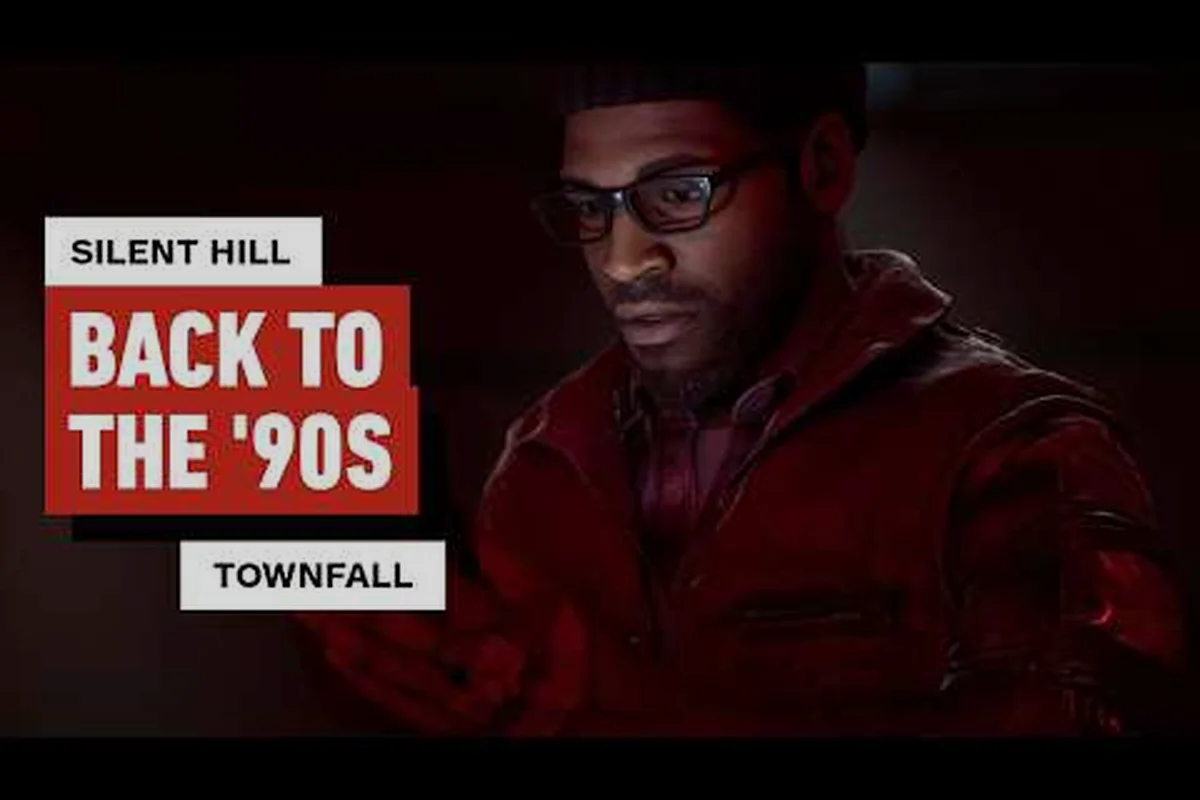
When the fog rolled across the SILENT HILL: Townfall on Steam page on launch day, one credit sat above the rest: Silent Hill Townfall director Jon McKellan. His name anchors a roughly 30-person crew at Screen Burn Interactive, the studio that pivoted from the experimental horror of Observation into a first-person psychological nightmare set on a fictional Scottish fishing island in 1996. Understanding who McKellan is, how his team is built, and which collaborators shaped the score, the cast, and the town's lingering dread gives players a much sharper reading of every foggy corridor they walk through in St. Amelia.
The Director Behind the Fog: Jon McKellan
Jon McKellan wears three hats on SILENT HILL: Townfall: director, writer, and the creative compass for the Screen Burn crew. His fingerprints are visible in almost every design choice that the Wikipedia entry for SILENT HILL: Townfall catalogs, from the decision to set the game on a remote North Sea island to the decision to anchor the entire experience around a portable pocket television called the CRTV. The CRTV replaces the franchise's iconic radio, scanning unstable analog frequencies to silhouette nearby monsters and to surface puzzle hints, a mechanic that doubles as a metaphor for how McKellan wants players to tune into the town itself.
McKellan's writing leans on restrained, environmental storytelling. Simon Ordell, the protagonist, is not given a monologue-heavy introduction; he is dropped onto a shoreline in 1996, surrounded by fog, and asked to listen. According to community discussion of early review coverage, this pared-down approach is what made the GamingBolt review describe the experience as "survival horror with light combat and stealth" rather than a combat-driven action game. McKellan has spoken in past interviews about preferring systems that force players to interpret rather than systems that explain themselves, and the CRTV is the clearest expression of that philosophy in SILENT HILL: Townfall.
Beyond mechanics, McKellan also drove the casting strategy. He has publicly framed the ensemble — Jovan Adepo, Kezia Burrows, and Terry O'Quinn — as a deliberate balance between a relative newcomer, a mid-career performer, and a genre veteran. That casting philosophy is reflected in how each character is written: Simon's silences, Zoe's transmissions over the CRTV, and Richard's cryptic summoning all feel calibrated rather than improvised. If you want a deeper look at how these performances map onto specific plot beats, the Jovan Adepo role breakdown covers how each actor's screen history informs their St. Amelia persona.
| Role | Credit | Notable Prior Work | Screen Burn Credit |
|---|---|---|---|
| Director / Writer | Jon McKellan | Observation (Screen Burn) | Director, Writer |
| Designer | Graeme McKellan | Observation (Screen Burn) | Lead Designer |
| Composer | Pilotpriest (Jesse Osborne-Lanthier) | Rez Infinite, Furi | Original Score |
| Publisher | KONAMI / Annapurna Interactive | SILENT HILL 2 Remake / Stray | Co-publishers |
| Engine | Unreal Engine 5 | MetaHuman, Nanite | Technical Foundation |
The Studio: Screen Burn Interactive
Screen Burn Interactive, the developer behind SILENT HILL: Townfall, was previously known as No Code, the Glasgow-based studio that shipped Observation in 2019. The rebrand coincides with the studio's pivot from a small narrative-experimentation team into a roughly 30-person production unit capable of delivering a first-person psychological horror title with multiple playable characters, diegetic UI, and a diegetic save system. According to the official PlayStation Store page, the studio handled the project end-to-end in collaboration with KONAMI and Annapurna Interactive, a co-publishing structure that has become more common for mid-sized prestige horror projects.
Screen Burn's design language carries over from Observation in subtle ways. The studio's previous title forced players to navigate a derelict space station from the perspective of a dormant AI; SILENT HILL: Townfall flips that concept and asks players to inhabit a single human body moving through a derelict human community. The throughline is the same: perception itself is the puzzle. Players do not simply open a map screen; they check an in-world map, save via payphones, and manage inventory through a CRTV that exists as a physical object in the protagonist's hands.
| Studio Snapshot | Detail |
|---|---|
| Founded | 2014 (as No Code) |
| Rebranded | 2024 (as Screen Burn Interactive) |
| Headcount | ~30 developers |
| Headquarters | Glasgow, Scotland |
| Previous Title | Observation (2019) |
| Publisher Partners | KONAMI, Annapurna Interactive |
The team size is a meaningful design constraint. A 30-person crew cannot fill a 60-hour open world, so McKellan and his team chose a focused, atmospheric experience. Reviews describe the game as "often phenomenal, held back by pacing" — a critique that lands differently when you realize how much diegetic scaffolding, original score, and bespoke monster design a small crew had to build within those limits. The result is a denser, more curated horror experience than a typical AAA release, with fewer collectibles but more environmental storytelling per square meter.
The Composer: Pilotpriest and the Sound of St. Amelia
SILENT HILL: Townfall's score is composed by Pilotpriest, the stage name of Jesse Osborne-Lanthier, a Canadian electronic artist known for Rez Infinite and Furi. The choice is significant because Akira Yamaoka's original franchise sound defined an entire subgenre of unsettling ambient music, and Konami's revival cycle has leaned on a mix of legacy composers and fresh voices. Pilotpriest sits firmly in the "fresh voice" camp: his work on Furi demonstrated an ability to fuse French electro, progressive house, and synthetic distortion into boss-ready anthems, while his Rez Infinite work proved he could deliver trance-like atmospheric textures.
For SILENT HILL: Townfall, that range translates into a score that shifts between two modes. The first mode is drone-based, low-frequency hums layered with field recordings of wind, gulls, and analog static — the kind of score that scores a shoreline walk better than a combat encounter. The second mode is percussive and synthetic, kicking in when Simon encounters one of the game's tumorous, axe-headed creatures or the syringe-wounded variants that several reviews flagged as the most disturbing enemy designs in the recent survival-horror cycle.
| Score Element | Pilotpriest's Approach |
|---|---|
| Atmosphere | Low-frequency drones, analog static, field recordings |
| Combat | Percussive synth, distorted bass, tempo-shifting motifs |
| Story Beats | Sparse piano fragments, vocal textures, reversed samples |
| CRTV Audio | Tuned to unstable analog frequencies for diegetic threat cues |
The CRTV mechanic is the score's secret weapon. Because the pocket television surfaces monster silhouettes and puzzle hints through unstable analog frequencies, Pilotpriest had to compose dozens of short audio stingers that could play in any order depending on what the player tunes into. According to community reports of developer interviews, the score includes layered stem-based tracks that the CRTV system crossfades dynamically, so two players standing in the same alley may hear slightly different audio depending on which frequency they last selected. That kind of systemic scoring is rare outside of systemic-sim genres and is a strong signal of how the Screen Burn team thinks about player-driven experience.
The Cast Reveal: August 25, 2026
The Silent Hill Townfall cast reveal landed on August 25, 2026, a little over a month before the game's September 24, 2026 launch. The reveal confirmed three principal performers: Jovan Adepo as Simon Ordell, Kezia Burrows as Zoe Ellis, and Terry O'Quinn as Richard, the enigmatic figure who summons Simon back to St. Amelia. The choice of Adepo — known for Fences, Overlord, and the When They See Us miniseries — gives the protagonist a performer capable of carrying long silences, while Burrows, who appeared in The Crown and Industry, brings a controlled, clipped delivery that suits a nurse communicating through a failing analog signal. For more on how the cast map onto the broader character roster, the characters overview is a useful cross-reference.
Jovan Adepo as Simon Ordell
Simon Ordell is the protagonist of SILENT HILL: Townfall, and the character's interior life is conveyed almost entirely through Adepo's performance rather than through dialogue. Adepo's screen history is heavy with characters who hold things in — a soldier processing trauma, a young man navigating a segregated world — and that restraint fits McKellan's direction. The actor's performance registers most clearly in the game's first-person cutscenes, where his reactions are captured from inside the helmet of Simon's POV rather than from a detached third-person camera.
Kezia Burrows as Zoe Ellis
Zoe Ellis is a nurse who contacts Simon via the CRTV, functioning as a deuteragonist for the game's occasional playable sections. The Silent Hill Townfall Kezia Burrows role is written as a foil to Simon: where Simon investigates, Zoe treats; where Simon walks into fog, Zoe works from a fixed radio station. Burrows' controlled delivery is well-suited to a character whose job requires her to stay calm under pressure, and the contrast between her clinical phrasing and the deteriorating analog signal she broadcasts through is one of the game's most effective atmospheric devices.
Terry O'Quinn as Richard
Terry O'Quinn plays Richard, the enigmatic man who summons Simon back to St. Amelia. The Silent Hill Townfall Terry O Quinn role is the franchise's most direct inheritance from the original series' tradition of mysterious authority figures, and O'Quinn's decades of playing layered, withholding characters — most famously John Locke on Lost — make him a natural fit. Richard appears in limited screen time, and each of his scenes is calibrated to leave more questions than answers. The casting signals that the role is meant to be re-interpreted on multiple playthroughs, especially given the game's multiple-endings tag on Steam.
| Actor | Character | Narrative Role | Genre Pedigree |
|---|---|---|---|
| Jovan Adepo | Simon Ordell | Protagonist, returnee to St. Amelia | Fences, When They See Us |
| Kezia Burrows | Zoe Ellis | Deuteragonist, CRTV nurse contact | The Crown, Industry |
| Terry O'Quinn | Richard | Enigmatic summoner, mystery anchor | Lost, Millennium |
Graeme McKellan and the Design Spine
Graeme McKellan, the lead designer and brother of Jon McKellan, handles the systems that the director's writing calls into action. The Silent Hill Townfall Graeme McKellan credit is most visible in the diegetic UI, the save system, and the encounter design. Players do not pause to manage inventory; they check the in-world map, save at payphones, and use the CRTV as their primary interface. That diegetic structure is a design decision with mechanical consequences: it forces players to commit actions in real time, which raises the tension of every encounter.
Encounter design is where the lead designer's role becomes most apparent. The base toolset is intentionally limited: a breakable melee weapon, a pistol, and thrown bottles or bricks. According to multiple reviews, the pistol's late-game revolver variant hits hard but reloads slowly and attracts creatures through noise, so direct confrontation is rarely the optimal path. The design team has effectively inverted the power fantasy of most first-person shooters: more firepower makes the game harder, not easier, because every shot is a beacon.
| Tool | Strength | Trade-Off |
|---|---|---|
| Breakable Melee | Silent, fast swings | Durability drains; can shatter mid-fight |
| Pistol | Ranged threat, ammo-limited | Loud; alerts nearby creatures |
| Late Revolver | High damage per shot | Slow reload; major noise penalty |
| Bottles / Bricks | Throwable distraction | Single-use; limited inventory space |
| Hiding (Cupboards, Cover) | Stealth-passive, free | Limited to specific geometry |
Graeme McKellan's design philosophy is also visible in the creature roster. Enemies include tumorous, axe-headed creatures and variants with syringes embedded in wounds. These designs are not interchangeable; each variant forces a different counter-strategy, and players report that the syringe variants in particular can stagger the protagonist through doors and thin walls, which feeds back into the designer's preference for environmental solutions over combat upgrades. For a closer look at how each creature maps to a specific counter-strategy, the enemy types guide breaks down the roster and the combat rhythm each one forces.
Frequently Asked Questions
Who is the director of SILENT HILL: Townfall?
Silent Hill Townfall director Jon McKellan leads the project, serving as both director and writer. He previously directed Observation at the same studio, which was then called No Code and is now Screen Burn Interactive. His writing and direction shape the CRTV mechanic, the diegetic UI, and the casting philosophy behind the principal cast.
What studio developed SILENT HILL: Townfall?
SILENT HILL: Townfall was developed by Screen Burn Interactive, the Glasgow-based studio formerly known as No Code. The studio rebranded ahead of the project and is roughly 30 people strong. KONAMI and Annapurna Interactive co-published the title.
When was the SILENT HILL: Townfall cast revealed?
The Silent Hill Townfall cast reveal took place on August 25, 2026, about a month before launch. Jovan Adepo was confirmed as Simon Ordell, Kezia Burrows as Zoe Ellis, and Terry O'Quinn as Richard, the enigmatic man who summons Simon back to St. Amelia.
What is the Silent Hill Townfall Terry O Quinn role?
Terry O'Quinn plays Richard, the enigmatic figure who summons Simon back to St. Amelia. The role is written in the franchise's tradition of mysterious authority figures and is intentionally limited in screen time, which lets each appearance carry more narrative weight and rewards repeat playthroughs.
What is the Silent Hill Townfall Kezia Burrows role?
Kezia Burrows plays Zoe Ellis, a nurse who contacts Simon through the CRTV. Zoe functions as a deuteragonist in the game's occasional playable sections and works from a fixed radio station, providing a clinical counterpoint to Simon's on-the-ground investigation of fog-shrouded St. Amelia.